The Tariff Reckoning: Why Market Leaders Use Turbulence to Redesign the Supply Chain

Executive Summary

Tariffs are reshaping global trade dynamics—introducing volatility, compressing margins, and forcing executives to confront structural vulnerabilities in their supply chains. But while many organizations hesitate, market leaders use turbulence as a catalyst to accelerate reinvention.

Bain’s latest research shows:

  • 75% of executives are concerned about uncertainty in US trade policy, coupled with ongoing challenges around supply chain cost increases
  • Consumer value sensitivity is rising, and companies face limited ability to pass through cost increases
  • The next frontier of advantage is resilience, not efficiency

Optilogic’s design-led work shows that the gap between awareness and action stems from a deeper issue: supply chains were engineered for stability, not the volatility now defining global trade.

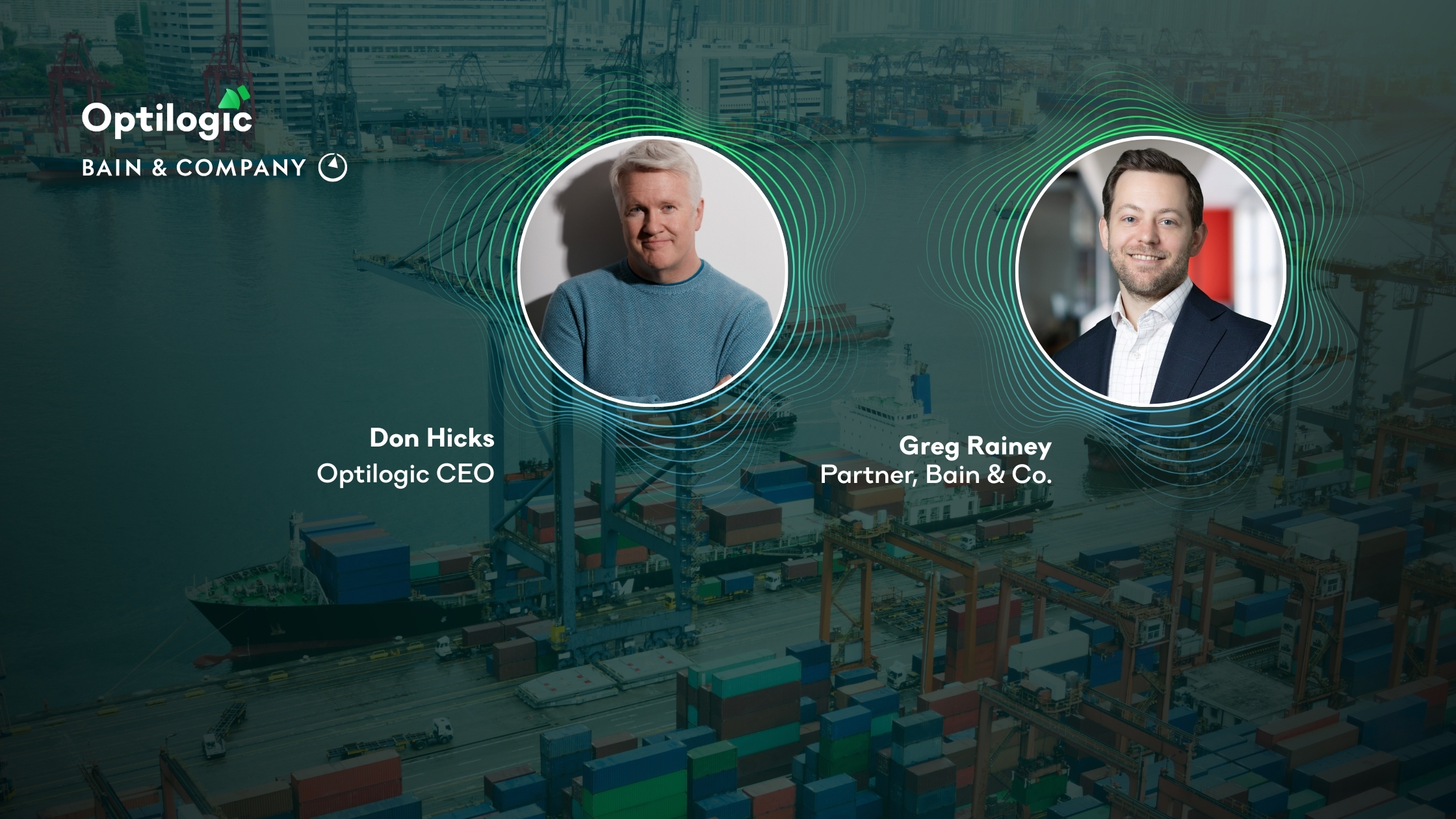
“Supply chains don’t fail because of volatility—they fail because they weren’t designed for it. Tariffs simply make that visible.” — Don Hicks, Founder and CEO of Optilogic
“The companies we see pulling ahead aren’t those just reacting to tariffs, they’re the ones reinventing themselves to be more flexible in an environment of extended uncertainty.” — Greg Rainey, leader in Bain & Company’s Performance Improvement practice

The New Reality: Tariffs Are a Symptom of Broader Structural Shifts

Across industries, Bain’s research highlights a rapidly changing environment in which tariffs are only one of several forces reshaping supply chains.

Structural challenges include:

  • Rising factor costs across energy, labor, capital, and transportation
  • Increasing geopolitical fragmentation
  • Demand variability and shifting consumer price elasticity
  • Climate-driven disruptions and compliance pressures

Executives report uncertainty—not tariff levels themselves—as the top barrier to action. But waiting for clarity is no longer viable; volatility is not temporary—it is becoming structural. Market leaders adopt a different posture: they accept uncertainty and design systems that perform under it.

Why Incremental Moves Fail: The Fragmentation Trap

Most companies respond to tariffs with well-intended but isolated actions: dual sourcing, regional capacity additions, traceability investments, or inventory increases. But Bain’s analysis shows that:

  • Less than 15%of companies say their suppliers have sufficient capacity in place to support nearshoring at scale
  • Nearly half of companies have explored or initiated nearshoring, but progress is slowed by supplier capability, labor availability, and infrastructure gaps
  • Many diversify suppliers without redesigning product architectures

These moves create cost without delivering resilience because they are not connected within a unified design. Market-leading companies avoid this trap by treating resilience as a system design challenge—not a purchasing or logistics exercise.

The Strategic Design Imperative

Strategic design reframes the work from reactive mitigation to architecture creation.

Leaders build supply chains that:

  • Flex across tariff scenarios without major reconfiguration
  • Shift production and sourcing dynamically
  • Balance redundancy with capital efficiency
  • Integrate network, product, supplier, and inventory strategies
  • Use models to evaluate tradeoffs and pressure-test decisions

What to Track: Distinguishing Signal from Noise

Market leaders succeed because they focus design decisions on predictable structural forces, while using optionality to buffer against unpredictable ones.

Predictable (design-worthy):

  • Demographics and labor availability
  • Cost of capital directionally rising
  • Regulatory and compliance expectations

Unpredictable (optionality required):

  • Tariff timing and magnitude
  • Climate variability impacting logistics
  • Election cycles
  • Variability in regulatory and trade rule enforcement

This separation ensures investments target the forces that matter, while optionality absorbs the ones that can’t be forecasted.

Four Moves That Set Leaders Apart

The leading companies Bain and Optilogic work with consistently deploy four strategic design capabilities:

  1. Build scenario-ready supply chain architectures
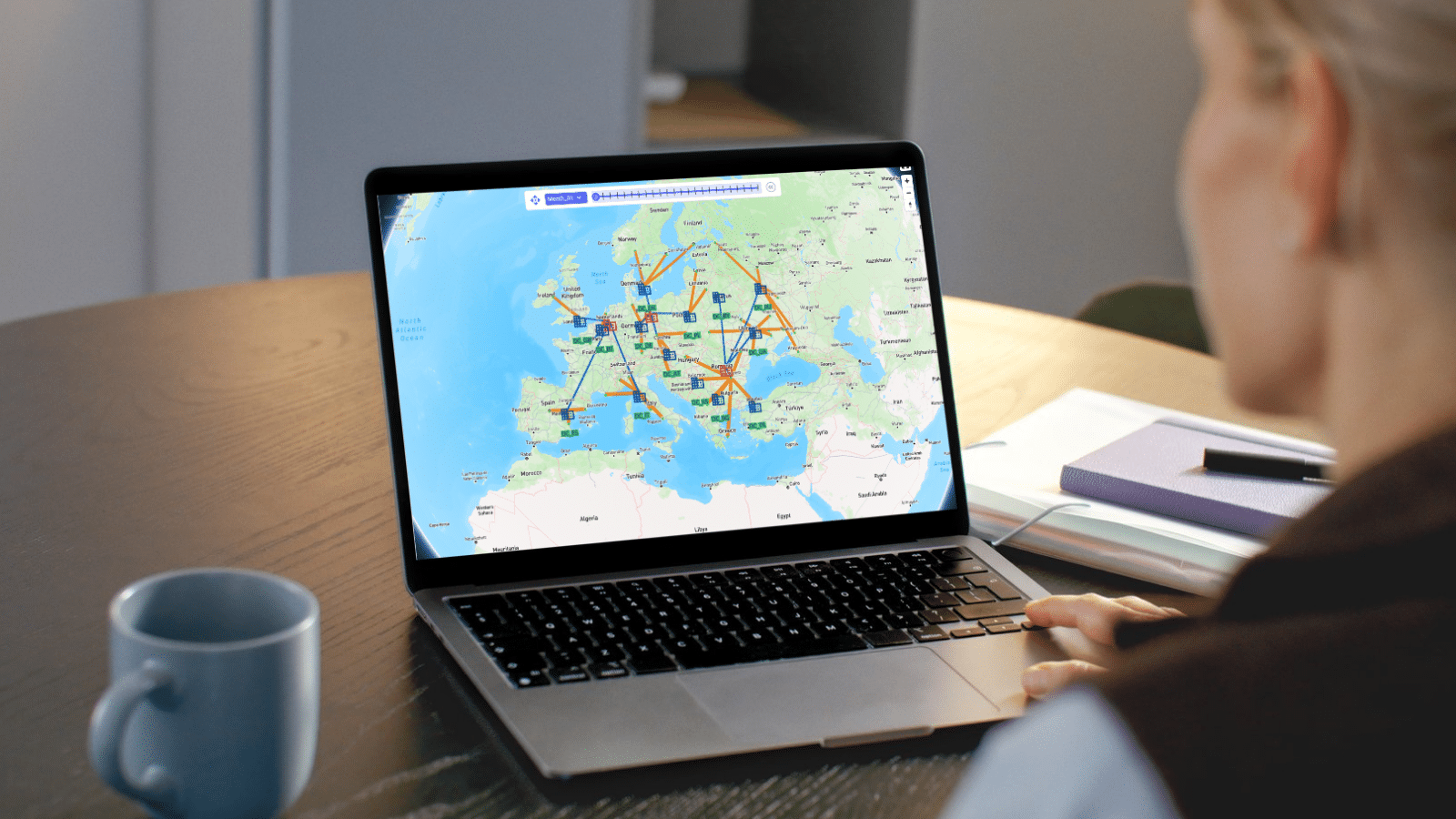
    • Leverage AI-enabled, rapid-cycle modeling capabilities to dramatically compress design timelines—allowing teams to evaluate dozens of scenarios, stress-test resilience across multiple futures, and identify flexible configurations before committing capitalIntegrate resilience tactics into a unified system
    • Nearshoring + dual sourcing + product modularity + inventory strategy must reinforce each other
  2. Use decision gates to accelerate—not delay—action
    • Nearshoring + dual sourcing + product modularity + inventory strategy must reinforce each other
  3. Use decision gates to accelerate—not delay—action
    • "If tariffs exceed X%, shift volume to Mexico"
    • "When supplier reliability hits Y%, move to dual-source mode"
    • "If logistics variability spikes, activate inventory repositioning"
    • Decisions gates are effective only when supposed by AI-enabled scenario analysis that allows assumptions to be tested continuously and trigger points to be validated in advance. Leading companies use this capability to stress-test options, pre-validate contingency plans, and transform decisions gates from theoretical constructs into executable playbooks — enabling leaders to respond in days rather than quarters.
  4. Move early to secure advantaged positions
    • While first movers face greater uncertainty and upfront investment risk, they also gain the ability to shape outcomes rather than react to them. By acting from an informed design position, they can secure:
      • Attractive supplier terms
      • Prime nearshore capacity
      • Favorable logistics contracts
      • Stronger customer value propositions

Leading companies mitigate first-mover risk by pairing early action with modular plans and built-in optionality—allowing them to scale investments up or down, shift volumes, or pause commitments as new information emerges.

In volatility, speed compounds advantage when it is matched with flexibility.

Closing: What Market Leaders Do in Times of Turbulence

Tariffs are not the core issue—they expose brittle systems and accelerate competitive divergence.

Market-leading companies:

  • Treat turbulence as a catalyst to redesign the supply chain
  • Build architectures that flex under multiple futures
  • Integrate decisions across network, sourcing, product, and inventory
  • Use decision gates to respond faster and with more precision
  • Invest early in optionality to seize advantage

The companies that pull ahead aren’t merely surviving tariffs—they are designing deliberately and acting with conviction to reengineer their supply chains to thrive in a world where volatility is the norm.

About Bain & Company and Optilogic

Bain & Company and Optilogic work together to help organizations design and execute resilient, future-ready supply chains amid ongoing volatility. Bain brings deep expertise in operations strategy, supply chain transformation, and network design, helping leaders make confident decisions under uncertainty. Optilogic complements this with advanced, AI-enabled modeling capabilities that enable rapid scenario evaluation and translate strategic intent into executable designs.

Together, Bain and Optilogic help companies move from insight to action—combining strategic rigor with the speed and flexibility required in today’s environment.

Executive Summary

Tariffs are reshaping global trade dynamics—introducing volatility, compressing margins, and forcing executives to confront structural vulnerabilities in their supply chains. But while many organizations hesitate, market leaders use turbulence as a catalyst to accelerate reinvention.

Bain’s latest research shows:

  • 75% of executives are concerned about uncertainty in US trade policy, coupled with ongoing challenges around supply chain cost increases
  • Consumer value sensitivity is rising, and companies face limited ability to pass through cost increases
  • The next frontier of advantage is resilience, not efficiency

Optilogic’s design-led work shows that the gap between awareness and action stems from a deeper issue: supply chains were engineered for stability, not the volatility now defining global trade.

“Supply chains don’t fail because of volatility—they fail because they weren’t designed for it. Tariffs simply make that visible.” — Don Hicks, Founder and CEO of Optilogic
“The companies we see pulling ahead aren’t those just reacting to tariffs, they’re the ones reinventing themselves to be more flexible in an environment of extended uncertainty.” — Greg Rainey, leader in Bain & Company’s Performance Improvement practice

The New Reality: Tariffs Are a Symptom of Broader Structural Shifts

Across industries, Bain’s research highlights a rapidly changing environment in which tariffs are only one of several forces reshaping supply chains.

Structural challenges include:

  • Rising factor costs across energy, labor, capital, and transportation
  • Increasing geopolitical fragmentation
  • Demand variability and shifting consumer price elasticity
  • Climate-driven disruptions and compliance pressures

Executives report uncertainty—not tariff levels themselves—as the top barrier to action. But waiting for clarity is no longer viable; volatility is not temporary—it is becoming structural. Market leaders adopt a different posture: they accept uncertainty and design systems that perform under it.

Why Incremental Moves Fail: The Fragmentation Trap

Most companies respond to tariffs with well-intended but isolated actions: dual sourcing, regional capacity additions, traceability investments, or inventory increases. But Bain’s analysis shows that:

  • Less than 15%of companies say their suppliers have sufficient capacity in place to support nearshoring at scale
  • Nearly half of companies have explored or initiated nearshoring, but progress is slowed by supplier capability, labor availability, and infrastructure gaps
  • Many diversify suppliers without redesigning product architectures

These moves create cost without delivering resilience because they are not connected within a unified design. Market-leading companies avoid this trap by treating resilience as a system design challenge—not a purchasing or logistics exercise.

The Strategic Design Imperative

Strategic design reframes the work from reactive mitigation to architecture creation.

Leaders build supply chains that:

  • Flex across tariff scenarios without major reconfiguration
  • Shift production and sourcing dynamically
  • Balance redundancy with capital efficiency
  • Integrate network, product, supplier, and inventory strategies
  • Use models to evaluate tradeoffs and pressure-test decisions

What to Track: Distinguishing Signal from Noise

Market leaders succeed because they focus design decisions on predictable structural forces, while using optionality to buffer against unpredictable ones.

Predictable (design-worthy):

  • Demographics and labor availability
  • Cost of capital directionally rising
  • Regulatory and compliance expectations

Unpredictable (optionality required):

  • Tariff timing and magnitude
  • Climate variability impacting logistics
  • Election cycles
  • Variability in regulatory and trade rule enforcement

This separation ensures investments target the forces that matter, while optionality absorbs the ones that can’t be forecasted.

Four Moves That Set Leaders Apart

The leading companies Bain and Optilogic work with consistently deploy four strategic design capabilities:

  1. Build scenario-ready supply chain architectures
    • Leverage AI-enabled, rapid-cycle modeling capabilities to dramatically compress design timelines—allowing teams to evaluate dozens of scenarios, stress-test resilience across multiple futures, and identify flexible configurations before committing capitalIntegrate resilience tactics into a unified system
    • Nearshoring + dual sourcing + product modularity + inventory strategy must reinforce each other
  2. Use decision gates to accelerate—not delay—action
    • Nearshoring + dual sourcing + product modularity + inventory strategy must reinforce each other
  3. Use decision gates to accelerate—not delay—action
    • "If tariffs exceed X%, shift volume to Mexico"
    • "When supplier reliability hits Y%, move to dual-source mode"
    • "If logistics variability spikes, activate inventory repositioning"
    • Decisions gates are effective only when supposed by AI-enabled scenario analysis that allows assumptions to be tested continuously and trigger points to be validated in advance. Leading companies use this capability to stress-test options, pre-validate contingency plans, and transform decisions gates from theoretical constructs into executable playbooks — enabling leaders to respond in days rather than quarters.
  4. Move early to secure advantaged positions
    • While first movers face greater uncertainty and upfront investment risk, they also gain the ability to shape outcomes rather than react to them. By acting from an informed design position, they can secure:
      • Attractive supplier terms
      • Prime nearshore capacity
      • Favorable logistics contracts
      • Stronger customer value propositions

Leading companies mitigate first-mover risk by pairing early action with modular plans and built-in optionality—allowing them to scale investments up or down, shift volumes, or pause commitments as new information emerges.

In volatility, speed compounds advantage when it is matched with flexibility.

Closing: What Market Leaders Do in Times of Turbulence

Tariffs are not the core issue—they expose brittle systems and accelerate competitive divergence.

Market-leading companies:

  • Treat turbulence as a catalyst to redesign the supply chain
  • Build architectures that flex under multiple futures
  • Integrate decisions across network, sourcing, product, and inventory
  • Use decision gates to respond faster and with more precision
  • Invest early in optionality to seize advantage

The companies that pull ahead aren’t merely surviving tariffs—they are designing deliberately and acting with conviction to reengineer their supply chains to thrive in a world where volatility is the norm.

About Bain & Company and Optilogic

Bain & Company and Optilogic work together to help organizations design and execute resilient, future-ready supply chains amid ongoing volatility. Bain brings deep expertise in operations strategy, supply chain transformation, and network design, helping leaders make confident decisions under uncertainty. Optilogic complements this with advanced, AI-enabled modeling capabilities that enable rapid scenario evaluation and translate strategic intent into executable designs.

Together, Bain and Optilogic help companies move from insight to action—combining strategic rigor with the speed and flexibility required in today’s environment.

Access this Resource

Fill out the form to unlock the full content

No items found.

Latest Updates from Optilogic

Latest Updates from Optilogic

No items found.
No items found.
No items found.
No items found.