Published by
Published on
February 19, 2026



Network transportation optimization in Cosmic Frog integrates network design and multi-stop routing into a single solve—revealing opportunities that traditional approaches miss and ensuring designs are operationally executable.
Supply chain teams have long treated network design and transportation routing as separate decisions. Design the network first, then figure out the routes. The problem: by the time you discover that your "optimal" network creates routing inefficiencies, you've already committed. With last-mile complexity growing and consolidation economics under pressure, the gap between strategic intent and operational reality has never been more costly to ignore.
Network Transportation Optimization gives you flexibility in how you bring routing into network decisions. Run an integrated solve that considers route costs during facility assignments—or design your network first and generate optimized routes from those assignments. Two approaches, one platform, and the ability to match your analysis to the question you're answering.
Traditional network optimization treats transportation as simple math: distance x rate = cost. But that's not how your trucks operate.
Last-mile delivery runs on multi-stop routes. Consolidation hubs bundle shipments. When your network model ignores these patterns, it ignores real costs—and the DC that looks optimal on paper becomes a problem when you factor in actual delivery economics.
Consider two customers located between DC1 and DC2. Standard network optimization assigns each customer to their closest DC. Logical, right? But what if a single truck from DC1 could serve both customers on one multi-stop route at lower total cost than two separate deliveries?
Point-to-point models can't see this opportunity. Network Transportation Optimization can.
Cosmic Frog offers two ways to bring multi-stop routing into network optimization. Which one you use depends on what question you're answering.
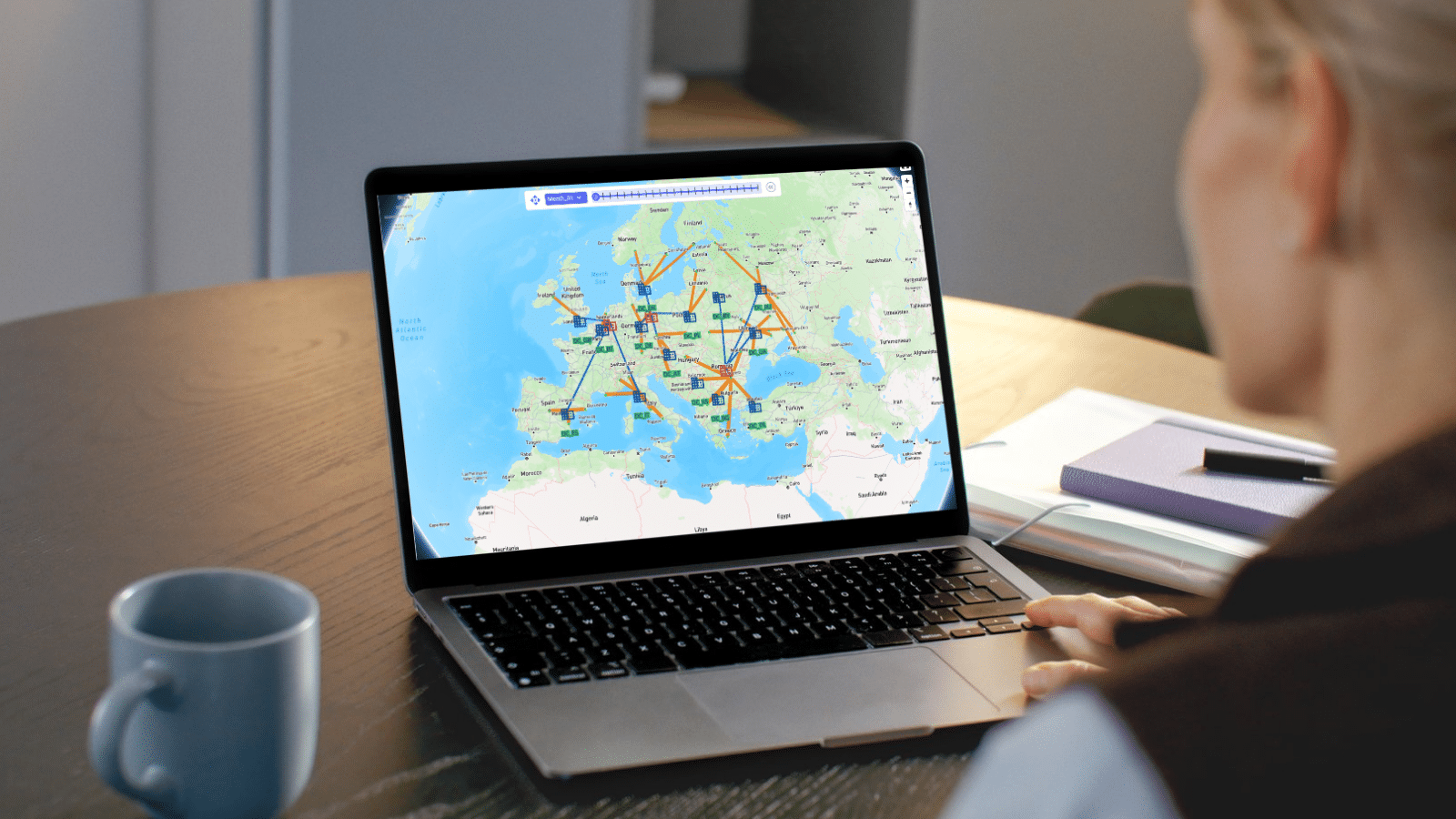
This approach solves network design and route optimization simultaneously. Multi-stop route costs and vehicle capacities factor directly into facility assignment decisions during the optimization solve itself. By calculating multi-stop route costs during network optimization—using these costs as part of transportation mode selection alongside Over the Road (OTR), Rail, and Air—you get more accurate answers in a single solve.
When to use it:
There may be opportunities where neighboring customers are better served from the same facility using consolidated multi-stop routes, even if a customer is technically closer to another DC. Network Transportation Optimization finds these opportunities automatically.
A manufacturer evaluating hub locations can see whether routing inbound supplier deliveries through a consolidation point creates savings that exceed the hub's operating costs—but only when the optimizer considers both network and routing economics together.
The result: Network designs that reflect true transportation economics, not theoretical point-to-point costs. Consolidation opportunities identified automatically. One integrated solve instead of iterating between disconnected analyses.
This approach automates running network optimization then generating optimized multi-stop routes based on those facility assignments. It's sequential, making it ideal when you need tactical route plans from an established network design.
When to use it:
After running Network Optimization to determine optimal DC locations and customer assignments, Transportation Optimization generates multi-stop delivery routes for the last leg of the journey. Compare different fleet configurations. Identify whether your current vehicles can handle the network assignments. Reveal capacity gaps before they become operational problems.
The result: Detailed route plans ready for execution. Validation that your network design is operationally feasible. Clear visibility into where routes or fleet capacity needs adjustment.
| Question You're Answering | Approach |
|---|---|
| Where should facilities be located given how we actually deliver? | Network Transportation Optimization |
| Should we use consolidation hubs or direct shipments? | Network Transportation Optimization |
| What routes should we run from our optimized network? | Automated Route Optimization |
| Can our current fleet handle our network design? | Automated Route Optimization |
Many teams use both: Hopper within NEO for strategic network decisions, then Hopper after NEO to generate executable route plans from the result.
Network Transportation Optimization transforms supply chain modeling from theoretical to operational. No more designing networks that work on spreadsheets but fail in the field. No more discovering after implementation that your "optimal" network creates routing headaches.
The capability scales from strategic design all the way to daily execution. Meijer uses a Cosmic Frog for Excel app that enables facility managers to optimize truck loads and routes every day across all of their facilities. Their teams adjust configurations as business conditions change—no waiting on a centralized modeling group, no rebuilding from scratch. The same optimization engine that powers strategic network design puts routing intelligence directly in the hands of the people making daily decisions.
Users have been asking for the ability to solve both network and transportation optimization together for years. Now you can—and the results carry through from boardroom strategy to warehouse floor execution.
No other major supply chain design platform offers this integrated capability today.
Network Transportation Optimization is available now in Cosmic Frog for all users. Template models in the Resource Library demonstrate both Hopper within NEO and Hopper after NEO configurations with preconfigured scenarios.
See a Quick Demo of Network Transportation Optimization
Watch Neeru Bhopal, Director of Product Management at Optilogic, demonstrate two ways to solve network and transportation optimization: calculating precise multi-stop routing costs as part of network design, or generating last-mile routes for an established network.
For detailed configuration guidance, visit the Help Center documentation. Have questions? Reach out to your Customer Success Manager or contact support@optilogic.com.
Network transportation optimization in Cosmic Frog integrates network design and multi-stop routing into a single solve—revealing opportunities that traditional approaches miss and ensuring designs are operationally executable.
Supply chain teams have long treated network design and transportation routing as separate decisions. Design the network first, then figure out the routes. The problem: by the time you discover that your "optimal" network creates routing inefficiencies, you've already committed. With last-mile complexity growing and consolidation economics under pressure, the gap between strategic intent and operational reality has never been more costly to ignore.
Network Transportation Optimization gives you flexibility in how you bring routing into network decisions. Run an integrated solve that considers route costs during facility assignments—or design your network first and generate optimized routes from those assignments. Two approaches, one platform, and the ability to match your analysis to the question you're answering.
Traditional network optimization treats transportation as simple math: distance x rate = cost. But that's not how your trucks operate.
Last-mile delivery runs on multi-stop routes. Consolidation hubs bundle shipments. When your network model ignores these patterns, it ignores real costs—and the DC that looks optimal on paper becomes a problem when you factor in actual delivery economics.
Consider two customers located between DC1 and DC2. Standard network optimization assigns each customer to their closest DC. Logical, right? But what if a single truck from DC1 could serve both customers on one multi-stop route at lower total cost than two separate deliveries?
Point-to-point models can't see this opportunity. Network Transportation Optimization can.
Cosmic Frog offers two ways to bring multi-stop routing into network optimization. Which one you use depends on what question you're answering.
This approach solves network design and route optimization simultaneously. Multi-stop route costs and vehicle capacities factor directly into facility assignment decisions during the optimization solve itself. By calculating multi-stop route costs during network optimization—using these costs as part of transportation mode selection alongside Over the Road (OTR), Rail, and Air—you get more accurate answers in a single solve.
When to use it:
There may be opportunities where neighboring customers are better served from the same facility using consolidated multi-stop routes, even if a customer is technically closer to another DC. Network Transportation Optimization finds these opportunities automatically.
A manufacturer evaluating hub locations can see whether routing inbound supplier deliveries through a consolidation point creates savings that exceed the hub's operating costs—but only when the optimizer considers both network and routing economics together.
The result: Network designs that reflect true transportation economics, not theoretical point-to-point costs. Consolidation opportunities identified automatically. One integrated solve instead of iterating between disconnected analyses.
This approach automates running network optimization then generating optimized multi-stop routes based on those facility assignments. It's sequential, making it ideal when you need tactical route plans from an established network design.
When to use it:
After running Network Optimization to determine optimal DC locations and customer assignments, Transportation Optimization generates multi-stop delivery routes for the last leg of the journey. Compare different fleet configurations. Identify whether your current vehicles can handle the network assignments. Reveal capacity gaps before they become operational problems.
The result: Detailed route plans ready for execution. Validation that your network design is operationally feasible. Clear visibility into where routes or fleet capacity needs adjustment.
| Question You're Answering | Approach |
|---|---|
| Where should facilities be located given how we actually deliver? | Network Transportation Optimization |
| Should we use consolidation hubs or direct shipments? | Network Transportation Optimization |
| What routes should we run from our optimized network? | Automated Route Optimization |
| Can our current fleet handle our network design? | Automated Route Optimization |
Many teams use both: Hopper within NEO for strategic network decisions, then Hopper after NEO to generate executable route plans from the result.
Network Transportation Optimization transforms supply chain modeling from theoretical to operational. No more designing networks that work on spreadsheets but fail in the field. No more discovering after implementation that your "optimal" network creates routing headaches.
The capability scales from strategic design all the way to daily execution. Meijer uses a Cosmic Frog for Excel app that enables facility managers to optimize truck loads and routes every day across all of their facilities. Their teams adjust configurations as business conditions change—no waiting on a centralized modeling group, no rebuilding from scratch. The same optimization engine that powers strategic network design puts routing intelligence directly in the hands of the people making daily decisions.
Users have been asking for the ability to solve both network and transportation optimization together for years. Now you can—and the results carry through from boardroom strategy to warehouse floor execution.
No other major supply chain design platform offers this integrated capability today.
Network Transportation Optimization is available now in Cosmic Frog for all users. Template models in the Resource Library demonstrate both Hopper within NEO and Hopper after NEO configurations with preconfigured scenarios.
See a Quick Demo of Network Transportation Optimization
Watch Neeru Bhopal, Director of Product Management at Optilogic, demonstrate two ways to solve network and transportation optimization: calculating precise multi-stop routing costs as part of network design, or generating last-mile routes for an established network.
For detailed configuration guidance, visit the Help Center documentation. Have questions? Reach out to your Customer Success Manager or contact support@optilogic.com.
Fill out the form to unlock the full content
.jpg)