Published by
Don Hicks
Published on
March 3, 2026



When news broke of the India-US trade deal, with US tariffs on Indian exports dropping from 25% to 18%, the headlines called it a historic reset. Supply chain leaders around the world asked the same question: should we redesign our networks around this?
My answer: not yet. And here's why that's the wrong question entirely.
We've been down this road before. Tariff rates move up, move down, and move again based on political winds. A seven-point reduction today can be reversed tomorrow. Any supply chain strategy built on the assumption that today's rate environment is stable is already behind.
What doesn't change is the underlying reality: the world is reorganizing into regional spheres of influence, and the US is no longer perceived as a reliable, predictable trading partner. That structural shift, not any individual agreement, is what should be reshaping how your network is designed. Worth noting: a significant portion of this deal involves US fossil fuel purchases. Global petroleum markets are liquid by nature, and agreements to shift energy sourcing rarely move the needle the way the headlines suggest.
Here's what is worth paying attention to: India itself. With one of the world's only growing populations, a track record of reaching bilateral agreements, and increasing strategic weight on the global stage, India is becoming harder to ignore, both as a manufacturing base and as a consumer market.
For multinationals over-indexed in other parts of Asia, this moment raises legitimate design questions: What would it take to make India a viable sourcing node? At what cost and volume thresholds does India outperform current regional suppliers? What non-tariff barriers — regulatory complexity, infrastructure gaps, local content requirements — actually constrain network performance more than the tariff rate itself? Tariffs are not the hardest part of doing business in India. They never have been.
Those aren't questions for a news release. They're questions for a supply chain model.
Consider what’s already happening on the competitive side. BYD, China’s leading EV manufacturer, recently announced efforts to develop India-specific vehicles for the local market. China views India as a long-term strategic target. It is moving accordingly. A small reduction in US tariffs won’t change that dynamic. It just means the competition for India’s market is already underway, with or without Washington’s involvement.
The companies that will survive this era of permanent volatility aren't waiting for policy certainty. They're running scenarios. They're stress-testing their networks against a wide range of tariff environments, not a single baseline. They're asking: at what rate does our India sourcing strategy flip? At what point does a regional hub in Southeast Asia outperform a direct relationship? What does our cost structure look like if US-China tensions escalate further?
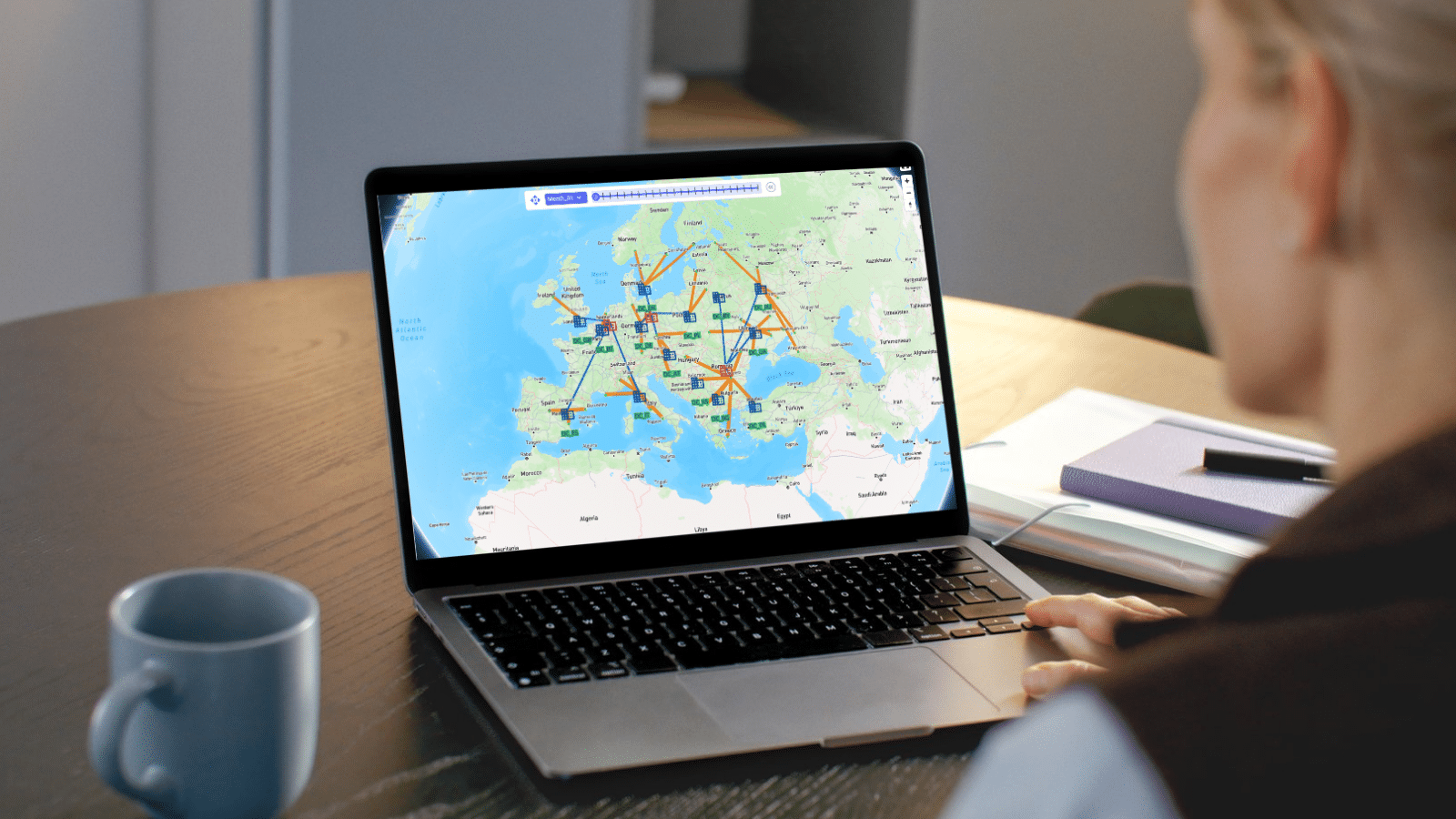
At Optilogic we are the kings and queens of ‘What If’. Using Optilogic's platform you can run hundreds or thousands of sensitivity analyses across dozens of variables simultaneously and then rapidly analyze for the best solution using AI agents. This way, supply chain leaders can see not just a future, but a range of them. Not a point estimate, but a decision landscape.
The companies already using this approach aren't reacting to trade deals. They're prepared for them, and for the next reversal.
Here's the hard truth: in an era where AI can compress months of planning into days, the bottleneck isn't computational power. It's strategic courage, the willingness to continuously redesign your network rather than optimize around a fixed structure that's increasingly out of date.
The India-US deal is a signal, not a solution. It signals that India's strategic importance is growing. It signals that geopolitical relationships are being actively renegotiated. And it signals that companies still waiting for "stability" to make design decisions are falling further behind the ones who've accepted that volatility is the permanent condition.
The rules will change. The winners will be the ones who change with them — and change fast.
Optilogic's Cosmic Frog helps supply chain leaders model what-if scenarios across complex, multi-variable trade environments. To see how leading global companies are using design to stay ahead of geopolitical uncertainty, request a demo or create a free Personal account to try for yourself.
When news broke of the India-US trade deal, with US tariffs on Indian exports dropping from 25% to 18%, the headlines called it a historic reset. Supply chain leaders around the world asked the same question: should we redesign our networks around this?
My answer: not yet. And here's why that's the wrong question entirely.
We've been down this road before. Tariff rates move up, move down, and move again based on political winds. A seven-point reduction today can be reversed tomorrow. Any supply chain strategy built on the assumption that today's rate environment is stable is already behind.
What doesn't change is the underlying reality: the world is reorganizing into regional spheres of influence, and the US is no longer perceived as a reliable, predictable trading partner. That structural shift, not any individual agreement, is what should be reshaping how your network is designed. Worth noting: a significant portion of this deal involves US fossil fuel purchases. Global petroleum markets are liquid by nature, and agreements to shift energy sourcing rarely move the needle the way the headlines suggest.
Here's what is worth paying attention to: India itself. With one of the world's only growing populations, a track record of reaching bilateral agreements, and increasing strategic weight on the global stage, India is becoming harder to ignore, both as a manufacturing base and as a consumer market.
For multinationals over-indexed in other parts of Asia, this moment raises legitimate design questions: What would it take to make India a viable sourcing node? At what cost and volume thresholds does India outperform current regional suppliers? What non-tariff barriers — regulatory complexity, infrastructure gaps, local content requirements — actually constrain network performance more than the tariff rate itself? Tariffs are not the hardest part of doing business in India. They never have been.
Those aren't questions for a news release. They're questions for a supply chain model.
Consider what’s already happening on the competitive side. BYD, China’s leading EV manufacturer, recently announced efforts to develop India-specific vehicles for the local market. China views India as a long-term strategic target. It is moving accordingly. A small reduction in US tariffs won’t change that dynamic. It just means the competition for India’s market is already underway, with or without Washington’s involvement.
The companies that will survive this era of permanent volatility aren't waiting for policy certainty. They're running scenarios. They're stress-testing their networks against a wide range of tariff environments, not a single baseline. They're asking: at what rate does our India sourcing strategy flip? At what point does a regional hub in Southeast Asia outperform a direct relationship? What does our cost structure look like if US-China tensions escalate further?
At Optilogic we are the kings and queens of ‘What If’. Using Optilogic's platform you can run hundreds or thousands of sensitivity analyses across dozens of variables simultaneously and then rapidly analyze for the best solution using AI agents. This way, supply chain leaders can see not just a future, but a range of them. Not a point estimate, but a decision landscape.
The companies already using this approach aren't reacting to trade deals. They're prepared for them, and for the next reversal.
Here's the hard truth: in an era where AI can compress months of planning into days, the bottleneck isn't computational power. It's strategic courage, the willingness to continuously redesign your network rather than optimize around a fixed structure that's increasingly out of date.
The India-US deal is a signal, not a solution. It signals that India's strategic importance is growing. It signals that geopolitical relationships are being actively renegotiated. And it signals that companies still waiting for "stability" to make design decisions are falling further behind the ones who've accepted that volatility is the permanent condition.
The rules will change. The winners will be the ones who change with them — and change fast.
Optilogic's Cosmic Frog helps supply chain leaders model what-if scenarios across complex, multi-variable trade environments. To see how leading global companies are using design to stay ahead of geopolitical uncertainty, request a demo or create a free Personal account to try for yourself.
Fill out the form to unlock the full content
.jpg)