Published by
Published on
February 10, 2026
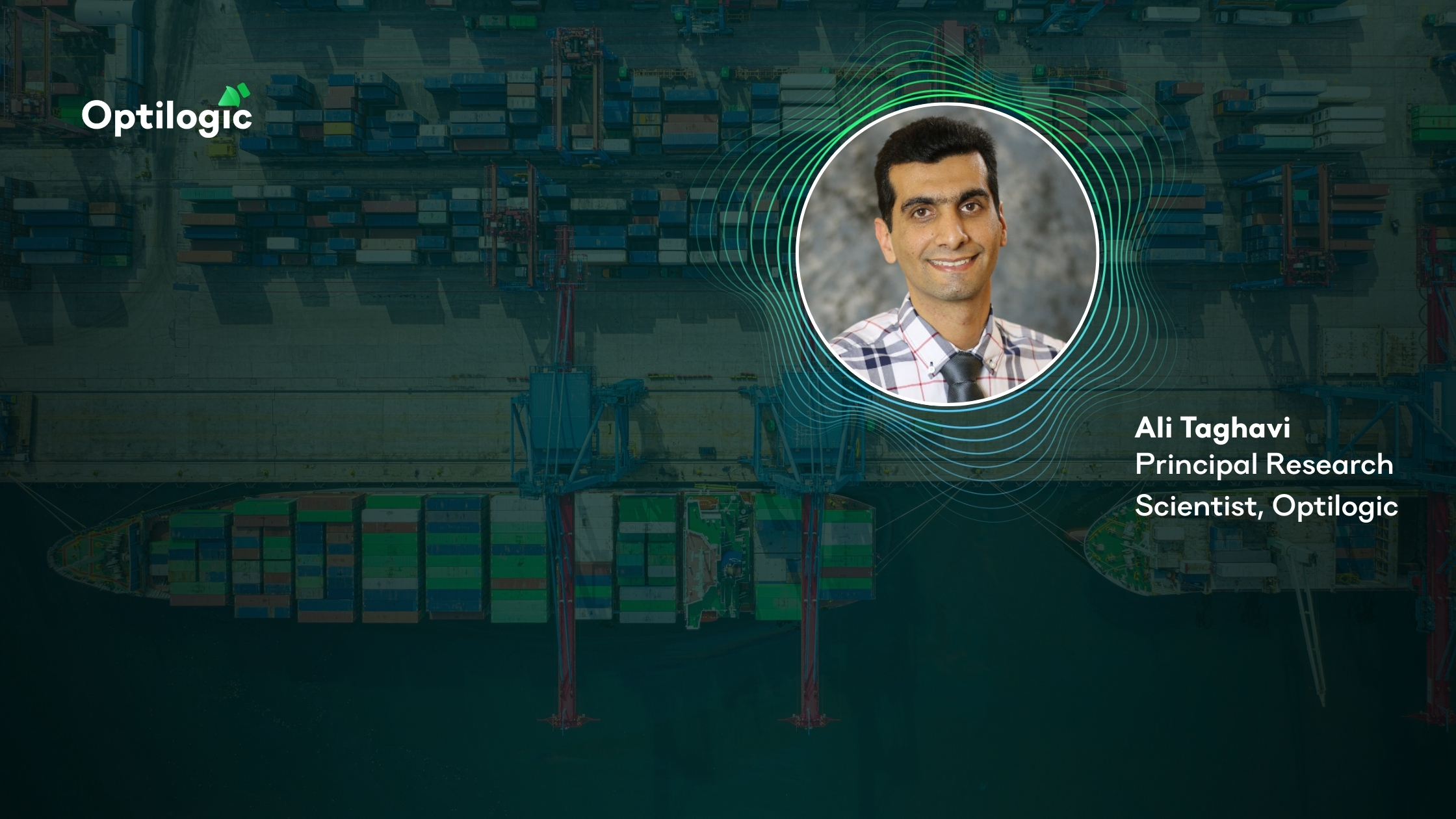



By Ali Taghavi, PhD, Principal Research Scientist, Optilogic
Every so often, a customer brings us a problem that sits at the very edge of what's computationally possible. These aren't typical network design challenges—they're the ones that stress-test the limits of modern optimization.
Recently, a major global logistics provider came to us with exactly this kind of problem:
For practitioners familiar with mixed-integer programming, these numbers tell a story. The sheer scale—combined with the integer variables that represent discrete network decisions—creates a problem where even state-of-the-art commercial solvers need time to find high-quality solutions.
At this scale, most optimization vendors would call it done. The model runs. It returns a feasible solution.
We took a different approach.
Interested to learn how a major global logistics provider got 42% cost savings in a quarter of the time with zero manual tuning?
Keep reading.
At Optilogic, we've never been content to treat the solver as a black box. While our platform leverages best-in-class commercial optimization engines, we also invest heavily in solver science—developing proprietary techniques that extend what's possible beyond off-the-shelf capabilities.
When this logistics provider's problem landed on our desk, our engineering team saw an opportunity: What if we could make our Network Optimization solver, NEO, smarter about how it attacks large-scale problems, not just faster at crunching through them?
The result is NEO Adaptive Intelligence—a new algorithmic capability that represents our latest advancement in network optimization.
Traditional optimization approaches apply generalized solving strategies designed to work reasonably well across a broad class of problems. They're powerful, but they're also generic—they don't learn from the specific structure of your network.
NEO Adaptive Intelligence takes a fundamentally different approach. Instead of treating every large-scale problem the same way, it analyzes your problem's unique architecture and adapts its strategy accordingly.
Before diving into the solve, NEO Adaptive Intelligence examines the problem's underlying structure:
This structural analysis builds an internal map of where computational effort will have the highest payoff.
Armed with these insights, the algorithm constructs a coordinated sequence of focused sub-problems. Each is strategically designed to:
This isn't about breaking the problem into disconnected pieces—it's about solving smarter, with each sub-problem informing the next.
The "adaptive" in NEO Adaptive Intelligence is literal: each solving iteration feeds back into the algorithm's strategy. It continuously refines its understanding of which decomposition approaches yield the fastest improvements for this specific problem.
The solver gets smarter as it runs—directing computational effort where it matters most and adjusting when early assumptions need refinement.
On the production-scale network optimization described above—6.9 million constraints, 8.2 million variables—NEO Adaptive Intelligence delivered:
75% faster. 42% better cost. Zero manual tuning.
NEO Adaptive Intelligence found a solution that industry-standard approaches simply couldn't reach in the same timeframe.
Commercial MIP solvers like Gurobi and CPLEX are remarkable pieces of engineering —decades of research distilled into highly optimized code. For most network optimization problems, they deliver excellent results out of the box.
But general-purpose solvers are, by design, general-purpose. They can't exploit the specific structure of supply chain networks: the geographic clustering, the product family relationships, the temporal patterns in demand. That domain knowledge lives in the modeling layer—and traditionally, it stays there.
NEO Adaptive Intelligence is an experiment in pushing that boundary. By building a learning layer that sits between the model and the solver, we can inject supply-chain-specific intelligence into the solving process itself. The algorithm doesn't replace the underlying optimization engine—it makes better use of it by focusing computational effort where the problem structure suggests it will have the most impact.
This is the kind of work that excites our engineering team: taking a real customer challenge, identifying where existing approaches fall short, and building something new to close the gap.
NEO Adaptive Intelligence is available now in Cosmic Frog. It requires no manual parameter tuning—the algorithm learns what works for your specific problem structure.
But here's what excites us most: we built this to solve one customer's toughest challenge, and now it's available for every Cosmic Frog user facing large-scale network optimization.
If you're working on problems that push the limits of what's currently possible, we want to hear about them because these are the challenges that drive our roadmap. Bring us your biggest, most complex network model.
Want to see NEO Adaptive Intelligence in action? Request a demo.
Ali Taghavi, PhD, is a Principal Research Scientist at Optilogic, where he focuses on the development of network and inventory optimization solutions. With 14 years of experience in supply chain optimization and a doctorate in Industrial and Systems Engineering, Ali has spent the past five years at Optilogic advancing the capabilities of the Cosmic Frog platform.
By Ali Taghavi, PhD, Principal Research Scientist, Optilogic
Every so often, a customer brings us a problem that sits at the very edge of what's computationally possible. These aren't typical network design challenges—they're the ones that stress-test the limits of modern optimization.
Recently, a major global logistics provider came to us with exactly this kind of problem:
For practitioners familiar with mixed-integer programming, these numbers tell a story. The sheer scale—combined with the integer variables that represent discrete network decisions—creates a problem where even state-of-the-art commercial solvers need time to find high-quality solutions.
At this scale, most optimization vendors would call it done. The model runs. It returns a feasible solution.
We took a different approach.
Interested to learn how a major global logistics provider got 42% cost savings in a quarter of the time with zero manual tuning?
Keep reading.
At Optilogic, we've never been content to treat the solver as a black box. While our platform leverages best-in-class commercial optimization engines, we also invest heavily in solver science—developing proprietary techniques that extend what's possible beyond off-the-shelf capabilities.
When this logistics provider's problem landed on our desk, our engineering team saw an opportunity: What if we could make our Network Optimization solver, NEO, smarter about how it attacks large-scale problems, not just faster at crunching through them?
The result is NEO Adaptive Intelligence—a new algorithmic capability that represents our latest advancement in network optimization.
Traditional optimization approaches apply generalized solving strategies designed to work reasonably well across a broad class of problems. They're powerful, but they're also generic—they don't learn from the specific structure of your network.
NEO Adaptive Intelligence takes a fundamentally different approach. Instead of treating every large-scale problem the same way, it analyzes your problem's unique architecture and adapts its strategy accordingly.
Before diving into the solve, NEO Adaptive Intelligence examines the problem's underlying structure:
This structural analysis builds an internal map of where computational effort will have the highest payoff.
Armed with these insights, the algorithm constructs a coordinated sequence of focused sub-problems. Each is strategically designed to:
This isn't about breaking the problem into disconnected pieces—it's about solving smarter, with each sub-problem informing the next.
The "adaptive" in NEO Adaptive Intelligence is literal: each solving iteration feeds back into the algorithm's strategy. It continuously refines its understanding of which decomposition approaches yield the fastest improvements for this specific problem.
The solver gets smarter as it runs—directing computational effort where it matters most and adjusting when early assumptions need refinement.
On the production-scale network optimization described above—6.9 million constraints, 8.2 million variables—NEO Adaptive Intelligence delivered:
75% faster. 42% better cost. Zero manual tuning.
NEO Adaptive Intelligence found a solution that industry-standard approaches simply couldn't reach in the same timeframe.
Commercial MIP solvers like Gurobi and CPLEX are remarkable pieces of engineering —decades of research distilled into highly optimized code. For most network optimization problems, they deliver excellent results out of the box.
But general-purpose solvers are, by design, general-purpose. They can't exploit the specific structure of supply chain networks: the geographic clustering, the product family relationships, the temporal patterns in demand. That domain knowledge lives in the modeling layer—and traditionally, it stays there.
NEO Adaptive Intelligence is an experiment in pushing that boundary. By building a learning layer that sits between the model and the solver, we can inject supply-chain-specific intelligence into the solving process itself. The algorithm doesn't replace the underlying optimization engine—it makes better use of it by focusing computational effort where the problem structure suggests it will have the most impact.
This is the kind of work that excites our engineering team: taking a real customer challenge, identifying where existing approaches fall short, and building something new to close the gap.
NEO Adaptive Intelligence is available now in Cosmic Frog. It requires no manual parameter tuning—the algorithm learns what works for your specific problem structure.
But here's what excites us most: we built this to solve one customer's toughest challenge, and now it's available for every Cosmic Frog user facing large-scale network optimization.
If you're working on problems that push the limits of what's currently possible, we want to hear about them because these are the challenges that drive our roadmap. Bring us your biggest, most complex network model.
Want to see NEO Adaptive Intelligence in action? Request a demo.
Ali Taghavi, PhD, is a Principal Research Scientist at Optilogic, where he focuses on the development of network and inventory optimization solutions. With 14 years of experience in supply chain optimization and a doctorate in Industrial and Systems Engineering, Ali has spent the past five years at Optilogic advancing the capabilities of the Cosmic Frog platform.
Fill out the form to unlock the full content
.jpg)