Published by
Published on
November 16, 2026



Every 2027 supply chain plan rests on assumptions about demand, costs, suppliers and trade. Some will hold. Others will move before the first quarter closes.
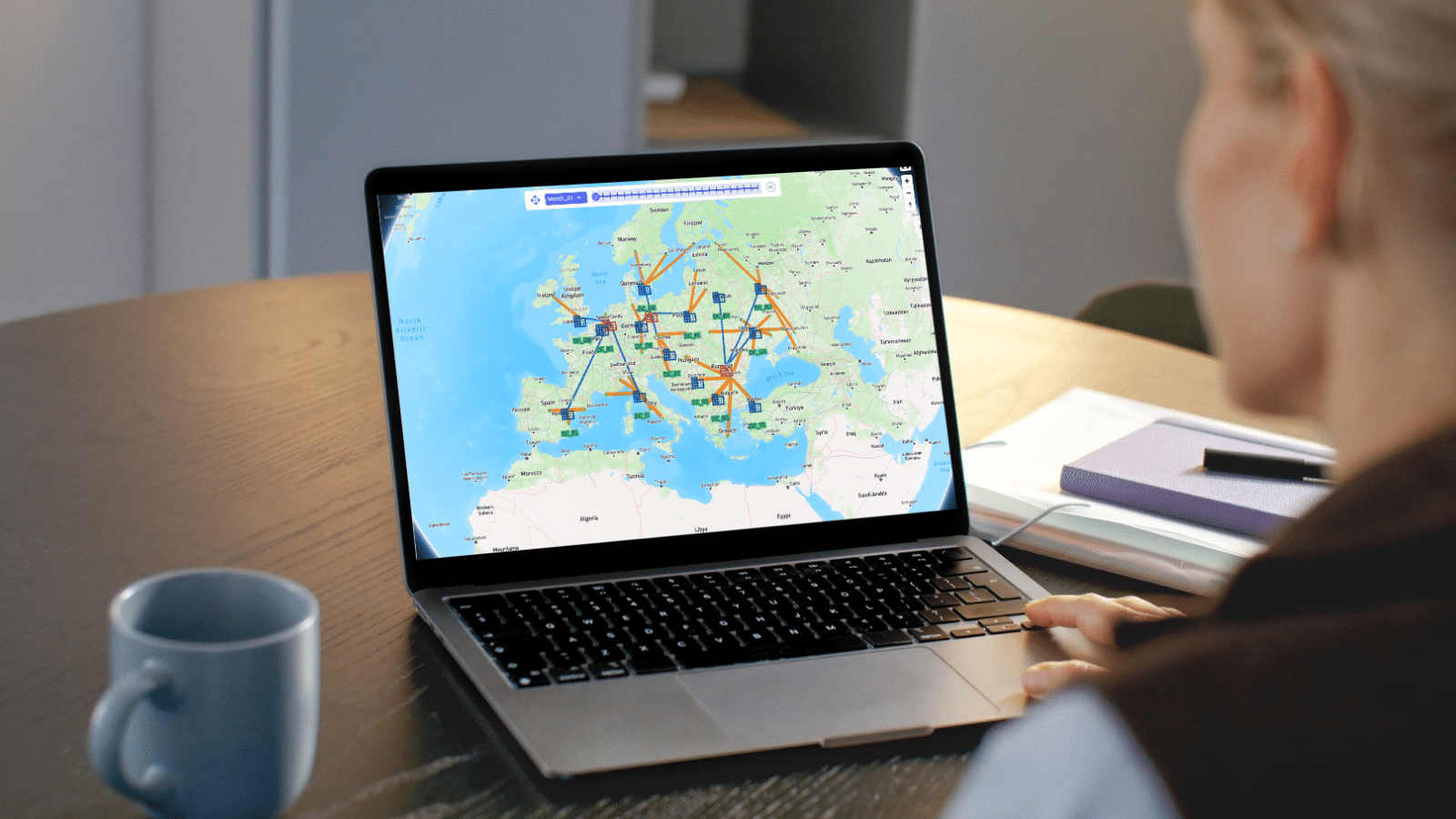
The strongest plans are tested against the scenarios most likely to move cost, service and risk, so leaders know how the network will respond and what they'll do next. With Optilogic's always-on decision intelligence platform, teams run those scenarios on a digital twin of their network and keep testing as conditions change.
Below are seven what-ifs worth running before your 2027 plan moves into execution, what each one tells you, and how to keep that testing going once the year starts.
Scenario testing shows how a plan performs across the conditions it's likely to meet, so leaders approve a strategy with its options already mapped.
A plan built on one forecast isn’t solid when conditions continually shift. Testing it in advance against several “what-ifs” answers the questions leadership will ask anyway: what happens to cost if demand drops, where the network is exposed, and how fast the business can respond.
Each scenario represents a decision option based on a set of variables such as demand or cost. The choice changes depending on your constraints and goals.
Test what your highest-volume trade lanes would cost at several tariff levels, and see where a change in sourcing or routing would protect margin. Trade policy kept moving through 2026, and a plan with a response already modeled can act on the next change in days.
Teams using Optilogic run these tariff scenarios on the same digital twin they use for the rest of the plan, so the trade-offs show up in total cost and service together.
What it tells you: which lanes carry the most exposure, and which alternative sources or routes are worth qualifying now.
Run regional demand scenarios across a range of demand outcomes to see where capacity, inventory and service reach their limits. The high case matters as much as the low one, because serving unexpected growth has a cost too.
What it tells you: where the network has room to grow, where it runs short, and what it costs to capture the upside.
Take your most critical supplier, plant or port out of the model for a set number of weeks, and measure the effect on service and cost. You can plan a playbook that tells you your best move to protect service and cost in the event of an unexpected supplier or plant outage, so you’re not responding blindly when the event occurs.
What it tells you: how long the network can absorb the outage, which backup options exist, and what they cost to keep ready.
Model transportation rates and fuel at higher and lower levels to see how much of your cost-to-serve depends on them. Mode and lane choices that work at today's rates can lose their advantage after a rate change.
What it tells you: which routes to rebalance, and how high freight rates must climb before a switch like truck to rail pays off.
Test the network with a facility added, removed or combined, and compare total cost and service against the current footprint. Footprint changes take the longest to reverse, so they deserve the most testing before they reach the plan.
Optilogic's network optimization compares each footprint option on total landed cost, service, and risk in one model.
What it tells you: whether a footprint change pays back, and under which conditions it stops paying back.
Cap capacity at key sites to reflect a staffing shortfall, a line outage or a carrier limit, and see where volume has to move. The constraint that matters is often a different site than the one the team expects.
What it tells you: where the real bottleneck sits and what it costs to relieve it.
Raise the service level in a region, such as wider next-day coverage, and price what it takes in inventory, facilities and transportation. Service promises are often made commercially before anyone models their cost.
What it tells you: what a service commitment costs, so commercial and supply chain leaders can agree on it before it's made.
General Motors uses Optilogic to solve, in 3.5 hours, a network model it had never been able to solve before. PECO Pallet improved its optimization run times by 75 to 90% with Optilogic.
With Optilogic, teams run network scenarios fast enough to test supply chain questions like these before the plan moves into execution. Speed decides whether a team tests a full set of what-ifs or settles for a single one run on a spreadsheet.
Speed matters even more after the plan is approved. When the digital twin stays current, the same what-ifs can run again as soon as a condition starts to move: a tariff announcement, a supplier warning, a shift in demand. Each run informs the next decision, which keeps the strategy sound as the year unfolds.
The most useful what-if scenarios come from people who understand both the business and optimization, because choosing the right question matters as much as answering it fast.
Deciding which scenarios matter, setting realistic assumptions and turning results into a recommendation all take experience. Optilogic's agentic AI Ada connected to your favorite AI answer tool lets anyone ask a question in plain language and get an answer grounded in their own network data. The resulting tested options provide a basis for deeper discussion in the boardroom, which often leads to further analysis and testing.
Optilogic's team works alongside customers, from framing the first scenario to staying with the strategy as conditions change through the year. As AI eliminates the need for manual model-building and scenario analysis, that commitment is what helps teams act on results with confidence.
A 2027 plan tested against these seven scenarios reaches leadership with its options mapped and its responses ready. It stays strong when the testing continues after approval, with each new condition run through the same digital twin.
That's the work Optilogic is built for: always-on decision intelligence, and a team committed to seeing each customer's strategy through.
Request a demo to see how Optilogic helps supply chain teams test their strategy and keep it sound as conditions change.