Published by
Published on
October 21, 2026


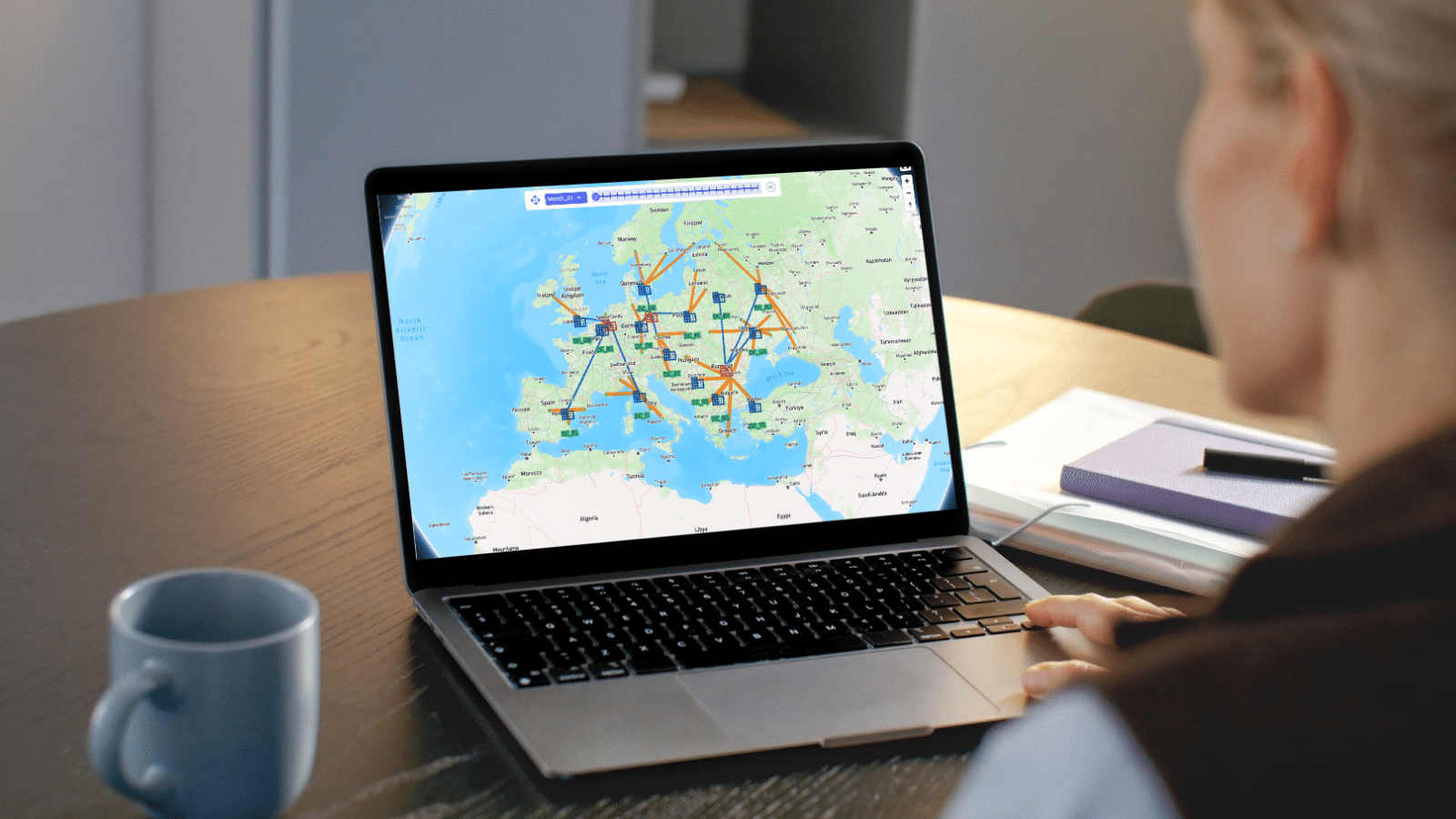
A tariff lands overnight. At 8 AM, your CEO asks what you're going to do about it. By 10, you've run hundreds of scenarios on a digital twin of your whole network and made a call you can trust.
The strongest supply chain decisions don't get made once. They get simulated, interrogated, and simulated again until the right one is clear. For most leaders, each round takes weeks. Here's what it looks like when each round takes minutes.
Each of those questions used to start a project. Pull the data. Reconcile it. Rebuild the model. Run the scenarios. One answer took weeks, so most leaders got one answer per planning cycle and decided on it. By the time it arrived, the question had changed. Always-on decision intelligence flips that model. You build the foundation once, keep it running, and ask it anything.
It starts with the right foundation. Your data already lives in data lakes, warehouses, ERPs, and planning systems. Optilogic doesn't replace any of it. AI works on the twin, never your systems of record. It pulls in what each decision needs, cleans it, enriches it, and scores its quality so you know what you're working with.
Next, Optilogic maps your data onto a built-in blueprint of how supply chains work. A row in a spreadsheet becomes a supplier that ships a part, on a lane, to a plant, at a cost, within a capacity. The data stops being a list of records and starts behaving like a network. (The technical term for this layer is a supply chain ontology.)
That foundation becomes the digital twin. An always-on model of your products, facilities, suppliers, customers, lanes, capacity, inventory, costs, and constraints, and how each one moves the others. Change one piece, and the twin shows you what changes with it.
Ada turns the twin into intelligence you can act on. Ada is Optilogic's agentic AI system for supply chain. Because the twin knows how every piece connects, Ada can reason across it to spot what deserves your attention: a capacity bottleneck, too much volume through one port, a customer who costs more to serve than they return, inventory sitting in the wrong place.
Finding the problem is only the beginning. The real power is going from insight to deep exploration of the alternatives. Ada builds the scenarios from the twin and runs them through two kinds of engines. Optimization searches thousands of combinations for the best answer. Simulation stress-tests that answer against disruption, variability, and delay. Together they cover a decision space no team could explore by hand, and bring back the strongest options with the tradeoffs between them.
Ask in plain language in any AI tool you currently use like Claude, ChatGPT, CoPilot, Gemini, or others, and get Ada's expertise right where you already work. No new tool to learn. No new login.
Your team takes the decision into S&OP. The twin stays on. Ada keeps watching the assumptions behind your call. When something meaningful changes, Ada can bring the decision back, rebuild the scenarios, and ask: is it still the right call?
Most leaders get one answer per planning cycle. With an always-on digital twin of your entire supply chain, you get as many answers as the decision needs, whenever you ask.
Your next decision is already waiting. Let’s make sure the answer is too. See it in action: request a demo.
Fill out the form to download the full content