Published by
Published on
November 23, 2026



By Prasad Mahajan, Senior Director of Customer Engagement, Optilogic
A few years ago, ocean container rates spiked, and the leadership team of a carpet manufacturer I worked with was ready to move production to Mexico.
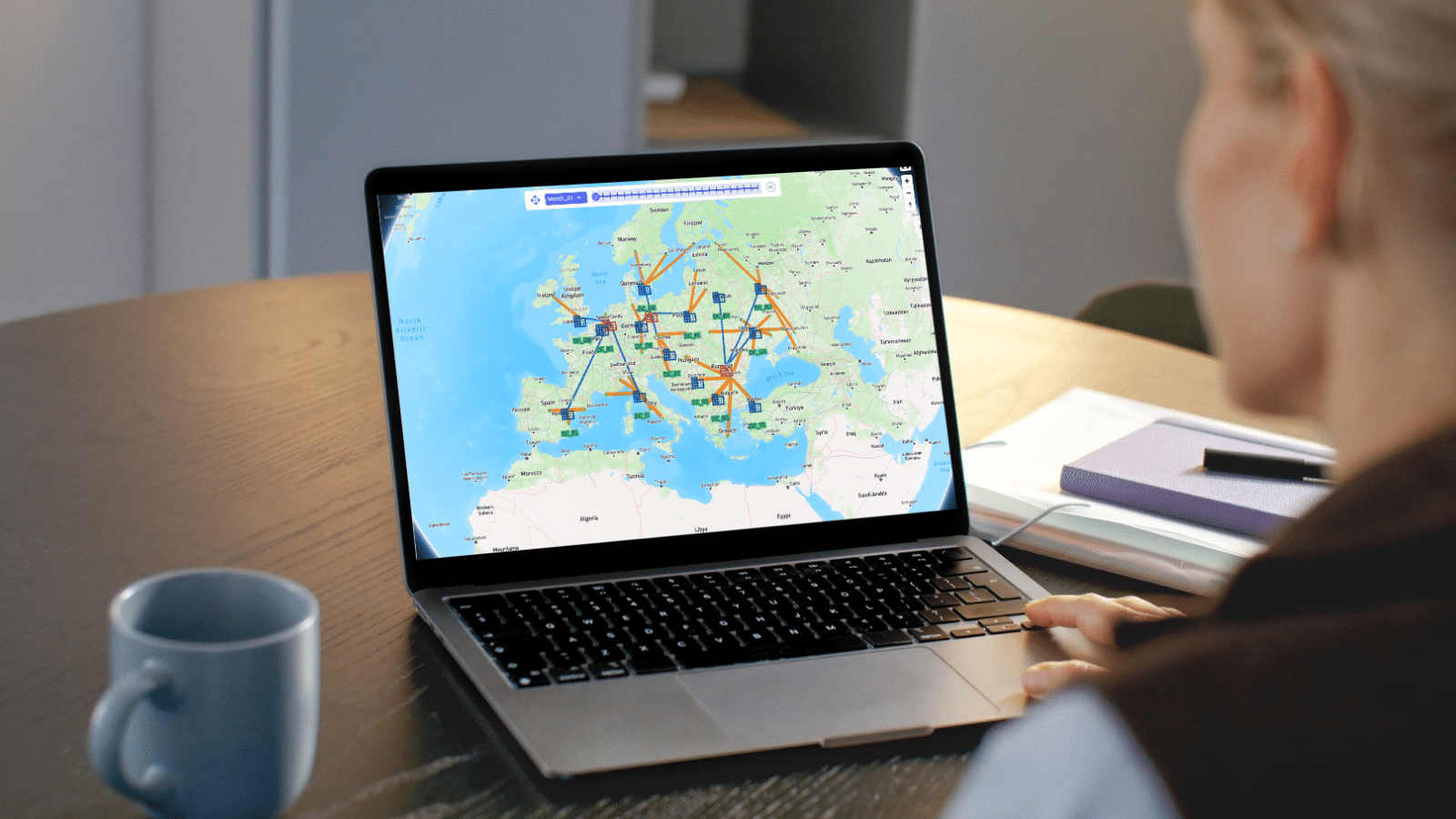
The logic made sense. The company brought raw materials and finished goods from Southeast Asia, and every container cost more than the last. Nearshoring promised shorter lead times and less exposure to ocean freight. Before committing, the team modeled the network. Mexico came out ahead, but only slightly: its advantages in transportation cost and lead time were largely offset by labor costs in Southeast Asia that were hard to beat. Weighed against long-standing supplier relationships and a disruption that looked temporary, the savings didn't justify the move. They stayed.
I shared that story recently on the episode “Models in Hours, Not Weeks” on the Industrial Insights Industrial Insights, a podcast hosted by industrial real estate broker Justin Smith, when he asked what executives most often get wrong. It captures a tension I've watched leaders manage for 22 years. A supply chain network is built on long-term commitments, and the environment around it changes month to month.
The right balance between long-term commitment and short-term agility starts with knowing your priority: service or cost.
Once that priority is clear, network optimization can weigh every cost in the network together and show leaders the best combination available. The decision to hold steady or to move can then be made with the full picture in view.
Most of a supply chain network is fixed for years. It rests on commitments that are expensive to unwind: plants, distribution centers, supplier contracts, and the people trained to run them. Meanwhile, the costs flowing through that network shift constantly, each responding to different forces. At any moment, one can spike while another falls, and whichever is rising fastest tends to dominate the conversation.
Right now, that's warehousing. The Logistics Managers' Index, a monthly survey of logistics executives in which any reading above 50 signals growth, put warehousing prices at 80.7 in October 2026, up from 73.5 in September. Aggregate logistics costs grew at their fastest pace since March 2022.¹ For the carpet manufacturer, the pressure point was ocean freight. Next time it may be labor, tariffs or a key supplier.
The risk runs in both directions. Hold too tightly to a fixed network, and you absorb costs a better design would avoid. React to every shock, and you could be trading lasting advantages, like supplier relationships or a trained workforce, for gains that fade when conditions settle. During the pandemic, companies that ran out of space signed leases at steep rates, and Justin noted that many are giving that space back today.
Justin offered a test during our conversation that I've found useful since: if the short-term problem went away, would you still be happy with the decision?
Supply chain design uses AI, optimization, and simulation to enable companies to pinpoint the best choices given a variety of trade-offs across cost, service, risk, and sustainability. Transportation, warehouse labor and storage, and inventory each respond to their own economic forces. Optimization provides a holistic view by weighing them all at once.
"At any given time, supply chain design is going to give you the best of all the combinations, because the technology looks at optimizing across all of these different costs as a single cost to serve."
Cost has a counterweight, though, and that's service. If service were the only goal, you'd put inventory right next to your biggest customers. Every leadership team says it wants the best of both, so the balance has to start from a clear priority.
"You need to have clarity on what is most important for your organization."
A sub-same day, same-day or next-day promise requires a different network than a two- to three-day promise, which leaves more room to optimize for cost. Once the priority is set, the model can show the lowest cost to serve that still meets it.
Here's how that played out for one manufacturer. Its plant was in Salt Lake City, and most of its customers were in Southern California. Staying close to those customers mattered for service, but costs there run high, so we modeled alternatives in Henderson, Nevada; Glendale, Arizona; and Reno, Nevada.
Some of the findings surprised people. Shipping into California from a site like Henderson can cost less than the mileage suggests, because it's a backhaul lane: carriers want to get back to California and price accordingly. Taxes mattered too. Some counties tax stored inventory, and that alone can change the answer.
The company chose Rialto, in Southern California's Inland Empire. The deciding factor was inbound freight. A sizable share of product arrived in ocean containers through Long Beach, and keeping that inventory close to the port outweighed the extra cost of moving goods from Utah. Weighing every cost together, inbound and outbound, is what made the answer clear.
The best network decisions come from people and optimization working together. The model weighs what can be measured. Leaders bring what they know from experience, and some of the most important factors sit outside the spreadsheet.
Ease of doing business is a good example. A location can look best on paper and still carry a reputation for being difficult to operate in, whether because of labor conditions, permitting or local relationships. Leaders often know this firsthand, and I've seen executives choose a location the numbers ranked second for exactly that reason. Incentives can tip things the other way, when a perfectly good location loses to one offering better terms.
Skilled labor is another. Opening a new facility is often simpler than relocating an existing one, because trained people may not move with it. On paper, a relocation can look like straightforward savings. Rebuilding years of training and experience in a new location carries a real cost that's easy to underestimate. And as the carpet manufacturer showed, supplier relationships belong on the scale too.
That makes modeling more valuable. When leaders can see exactly what a judgment call costs, they can make it deliberately.
A fixed network can still respond quickly when the response is planned in advance. At a recent supply chain conference, a theme I kept hearing from chief supply chain officers was how much of their work now feels like firefighting. Disruptions are growing in number and becoming part of normal operations.
"Disruptions are not going to stop. What we can do is make sure you're prepared, with a playbook ready, so you're never starting from scratch."
For many organizations, network modeling is still a one-time study run before a big decision. An always-on digital twin keeps a curated, connected picture of your supply chain ready, so teams can build playbooks in advance. It’s built to refresh on a schedule once your systems are connected. For example: If a key supplier goes down, these three actions come first. If ocean rates double for six months, here are the options. When disruption arrives, leaders start from a plan they've already tested.
Simulation takes this a step further. Running hundreds or thousands of scenarios can flag specific risks well before they become urgent, such as the month a facility will run out of capacity at current growth. Knowing today that your network reaches its limit in June 2028 gives you time to plan on your own terms.
Who benefits most? In my experience, exposure matters more than size. A smaller company that depends on a handful of critical suppliers can be just as vulnerable as a global enterprise.
I'll admit I was skeptical of some speed claims when I joined Optilogic in February. I came in with limited hands-on modeling experience. Within a month, I had personally built eight to 10 models, each in a matter of hours, covering network optimization, transportation routing, and fleet sizing. Data readiness made the difference. Optilogic’s DataStar keeps data pipelines connected and current, and Optilogic's Ada, our agentic AI, helps cleanse and structure data, build models, and explain results: what changed, why it changed, and which next steps deserve a leader's attention. (My colleague Gavin Schwarzenbach goes deeper on how AI is shortening data preparation.) When data needs more work, timelines run longer, but the path is the same.
Our CEO, Don Hicks, encourages supply chain teams to be curious and keep asking “What If...?”, and that advice holds up whether your team is mature or just getting started. Some organizations are ready to build a center of excellence. Others want a quick improvement they can deliver this quarter. Either path is a good one. What matters is being thoughtful about where the value is and how quickly you want to deliver it, without getting lost in the weeds. If your data isn't ready yet, start small, get a quick win and show the return.
A few questions worth asking your team:
A supply chain network will always carry long-term commitments, and the environment around it will keep changing. The leaders who manage that tension well know their priority, simultaneously weigh every cost and bring their own judgment to what the model shows. The carpet manufacturer's leaders rode out a temporary spike with their supplier relationships intact. This is decision intelligence in practice: a tested decision before you commit.
To see how a tough question becomes a tested decision on your own network, request a demo.
Prasad Mahajan is Senior Director of Customer Engagement at Optilogic, where he helps customers design their supply chains and build in-house modeling capability. He previously spent 22 years at Transplace and Uber Freight, building optimization applications and helping launch a supply chain consulting practice. He also writes about why supply chain design is now a continuous discipline.
1. Logistics Managers' Index, October 2026 report, released November 3, 2026, as summarized by Trading Economics.