Published by
Published on
July 1, 2026
.png)



For years, Castrol's supply chain network design work was handled almost entirely by external consultancies. That model provided access to expertise and analytical capability when a specific question arose — but it came with a structural limitation: when each engagement ended, so did the model. There was no living representation of the network, no way to refresh the analysis as conditions changed, and no institutional capability to respond quickly to new questions without commissioning new work. The consequence was a supply chain function that was largely reactive. Decisions about plant sourcing, distribution flows, and market service strategies had to wait for the next engagement cycle. When disruptions occurred — shifts in trade lanes, tariff changes, demand volatility — the team had limited ability to model alternatives in anything close to real time. The work got done, but the pace and flexibility were constrained by the outsourced model.
Global Supply Chain Optimisation Manager Daniel Davis and the Castrol supply chain team recognized that the answer wasn't a better consultancy arrangement — it was a fundamentally different operating model. The goal was to build an internal center of excellence with the capability to own, maintain, and continuously improve the company's supply chain models, reducing dependence on external expertise and building the institutional knowledge that outsourcing had made difficult to accumulate.
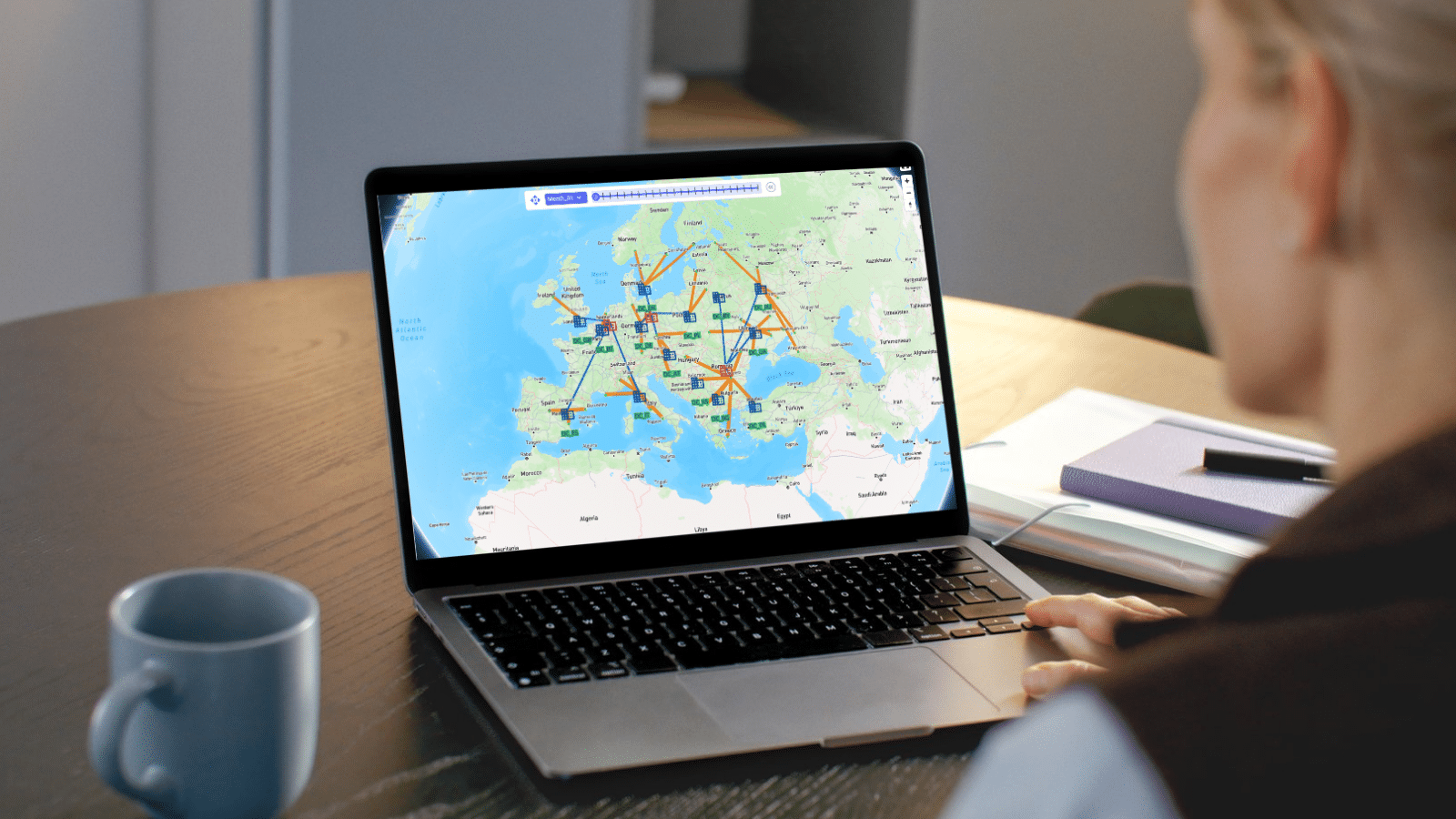
Castrol began with a clear objective: build the first global end-to-end supply chain model the company had ever had. Working in Optilogic's Cosmic Frog, the team constructed a model that captured what plant produces what product for what market at what landed cost — a level of visibility that had never existed internally before.
The scope of the initial model was deliberately comprehensive. Rather than starting with a single region or product line, Castrol built at the global level, so that the model could answer strategic questions about sourcing, flow optimization, and market service from day one. The intent was to build something that could be refreshed and extended — not a snapshot, but a persistent capability.
With that foundation in place, the team has continued to expand what the models can do. Tariff disruption scenarios, which previously would have required external engagement to model, are now handled internally. Trade route analysis and flow optimization are ongoing. And Castrol is actively exploring what Ada and DataStar can add -- looking at the potential for more dynamic, data-driven inputs to make the models faster to update and more responsive to current conditions.
.png)
The first global product flow optimization model identified and delivered millions in savings. That outcome validated the investment in building an internal capability -- but it's not the full story. More significant is what the capability makes possible on an ongoing basis.
When tariff disruptions hit, Castrol’s team can now model rerouting options in near real time, without waiting for an external engagement to begin. The models that were built are still live, still refreshable, and still generating value.
The shift from outsourced to owned represents more than cost savings on individual projects. It represents a change in how the supply chain function operates — from a reactive, project-driven model to a proactive, capability-driven one. Each new question the business asks can now be answered using models that already exist, already reflect current conditions, and can be updated without starting from scratch.
For years, Castrol's supply chain network design work was handled almost entirely by external consultancies. That model provided access to expertise and analytical capability when a specific question arose — but it came with a structural limitation: when each engagement ended, so did the model. There was no living representation of the network, no way to refresh the analysis as conditions changed, and no institutional capability to respond quickly to new questions without commissioning new work. The consequence was a supply chain function that was largely reactive. Decisions about plant sourcing, distribution flows, and market service strategies had to wait for the next engagement cycle. When disruptions occurred — shifts in trade lanes, tariff changes, demand volatility — the team had limited ability to model alternatives in anything close to real time. The work got done, but the pace and flexibility were constrained by the outsourced model.
Global Supply Chain Optimisation Manager Daniel Davis and the Castrol supply chain team recognized that the answer wasn't a better consultancy arrangement — it was a fundamentally different operating model. The goal was to build an internal center of excellence with the capability to own, maintain, and continuously improve the company's supply chain models, reducing dependence on external expertise and building the institutional knowledge that outsourcing had made difficult to accumulate.
Castrol began with a clear objective: build the first global end-to-end supply chain model the company had ever had. Working in Optilogic's Cosmic Frog, the team constructed a model that captured what plant produces what product for what market at what landed cost — a level of visibility that had never existed internally before.
The scope of the initial model was deliberately comprehensive. Rather than starting with a single region or product line, Castrol built at the global level, so that the model could answer strategic questions about sourcing, flow optimization, and market service from day one. The intent was to build something that could be refreshed and extended — not a snapshot, but a persistent capability.
With that foundation in place, the team has continued to expand what the models can do. Tariff disruption scenarios, which previously would have required external engagement to model, are now handled internally. Trade route analysis and flow optimization are ongoing. And Castrol is actively exploring what Ada and DataStar can add -- looking at the potential for more dynamic, data-driven inputs to make the models faster to update and more responsive to current conditions.
The first global product flow optimization model identified and delivered millions in savings. That outcome validated the investment in building an internal capability -- but it's not the full story. More significant is what the capability makes possible on an ongoing basis.
When tariff disruptions hit, Castrol’s team can now model rerouting options in near real time, without waiting for an external engagement to begin. The models that were built are still live, still refreshable, and still generating value.
The shift from outsourced to owned represents more than cost savings on individual projects. It represents a change in how the supply chain function operates — from a reactive, project-driven model to a proactive, capability-driven one. Each new question the business asks can now be answered using models that already exist, already reflect current conditions, and can be updated without starting from scratch.
Fill out the form to unlock the full content
.jpg)